16th February 2026
 Leave a comment
Discover with us the most popular Gastronomic Festivals in Malaga in March. The majority of this month’s events will take you to the inland white villages. These villages of Moorish origin are located in the mountain ranges of Malaga, such as the Guadalhorce Valley, Serrania de Ronda and the Axarquia, with the highest peaks of the province.

Combine a visit to the interior where time is slower, many traditions are still preserved and of course with excellent local gastronomy!
Gastronomic Festivals Malaga in March
“Taste of Malaga” Market – Torremolinos
The popular coastal resort Torremolinos is hosting an edition of the popular “Sabor a Málaga” Market, featuring exclusively local agricultural products from the province.
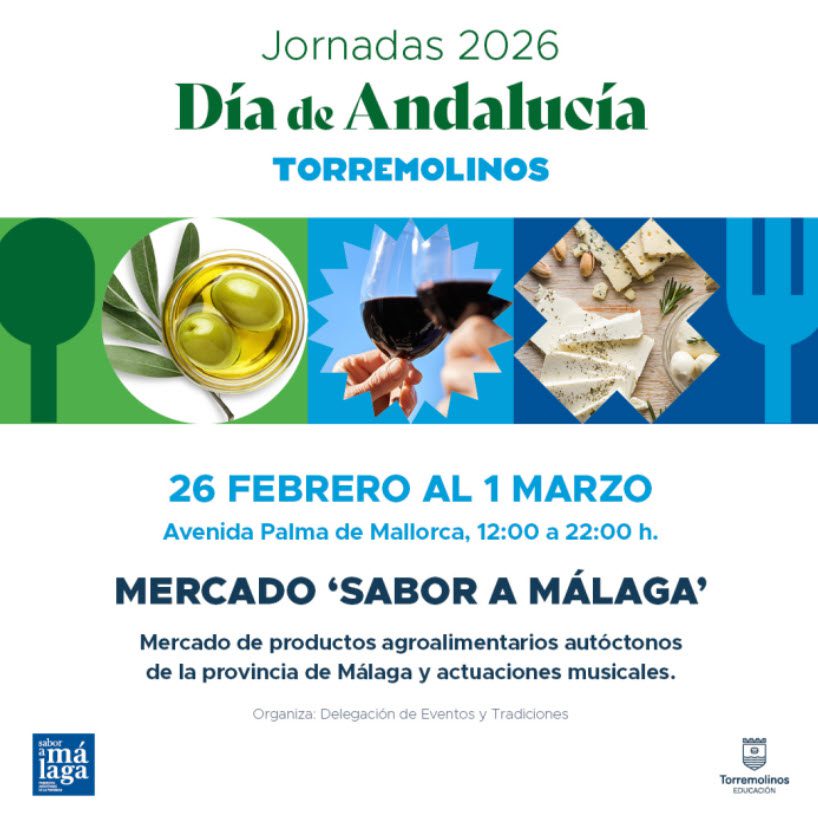
Take a stroll trouhg the city centre and discover the most delicious flavors of Malaga. You can purchase local products such as cheeses, oils, coffees, pickles, nuts, jams, eggs or honeys. There will also be a wide range of activities, including workshops, tastings and cooking demonstrations, as well as live music performances.
- When: February 26 to March 1, from 12 pm to 10 pm
- Where: Avenida Palma de Mallorca, Torremolinos
- How to get there
Tagarnina Day – Villanueva del Rosario

Villanueva del Rosario is a municipality situated in the northeast of the province, about 40 km from Malaga. The area in general has so far escaped tourist interest as it is further away from Malaga.
The municipality is noted for its spectacular natural beauty with ash and poplar trees through which the upper Guadalhorce River flows and the El Chorro spring is located.
During the month of March every year the village pays homage to one of its typical dishes made with the Tagarnina. It is a wild plant similar to asparagus that grows in the surrounding mountain ranges and with which are made dishes like stews, casseroles and scrambled eggs.
The gastronomic event includes a free tasting of this popular stew at the town’s Plaza del Rosario.

Furthermore there are other activities for everybody such as musical performances and a street market where you can buy local products.

In addition there will be a guided hiking route to the Mirador de Hondonero from the Plaza Andalucía, with breakfast at the end. Registration is required for this activity.
- If you are in the area, don’t miss a visit to the Ermita de la Virgen del Rosario and the source of the River Cerezo less than 2 km from the centre of the village. The area also boasts a large number of hiking trails.
- When: 22 March
- How to get there
Fennel Stew Day – Algatocín

Algatocín is a small white village in the region of the Serranía de Ronda, with less than 900 inhabitants. It is situated in the west of the province in the Genal Valley, about 50 km from Estepona.
In this village there is a long tradition of cultivating fennel, a plant characteristic of the area, in the winter months. They are cooked in the village´s traditional fennel stew.

The gastronomic and cultural festival takes place over a whole weekend in the village and pays tribute to this popular spoon dish.
There will be free tastings of the stew, along with tasty spoon omelettes. There is also a wide variety of activities for all ages such as: There will be craft stalls, live cooking workshops, cultural events, musical performances, guided tours of the village and children’s workshops. And last but not least, there is a big verbena on Saturday night.

- By the way, if you are in Algatocín don’t forget to visit the Bakery Pan Piña.
This bakery, founded in 1940, has become famous for producing five of the most expensive breads in the world. This bread, which incorporates silver and gold, will only be affordable for the very wealthy: a kilo costs 10,750 euros. However, the bakery offers a wide variety of handmade delicacies, making it a must-visit!

- Hiking enthusiasts can take advantage of their visit to the village to discover the footbridges of the Genal river.
- When: 7 and 8 March
- How to get there
Gastronomic Fair – Benarrabá

The tiny white village of Benarrabá of Moorish origin has less than 500 inhabitants. It is also located in Serranía de Ronda mountain ranges, about 550 metres above sea level, about 50 km from Estepona.
For several days between February and March this small village becomes the gastronomic epicentre of Serranía de Ronda. Specifically, the activities will take place at Plaza de la Veracruz.
There, the bars of the village will set up an open-air bar area. There will be numerous stands with gastronomic and artisan products made in the area.

Visitors will be able to enjoy live cooking demonstrations, live music and a Professional Ham Cutters Competition. And of course there will be free tastings of Benarrabá’s star dish, salmorejo de carne.
- Want to take a refreshing dip in the summer months? Visit the Charca de la Escribana just 4 km from the village.

- Hiking enthusiasts can enjoy a beautiful water route along the Genal River. More information and description of the route on Wikiloc
- When: from 28 February to 1 March
- How to get there
Typical dishes of Malaga during Lent & Easter
This year, Holy Week takes place from Sunday, March 29th to Sunday, April 5th, 2026. Right after Carnival, Ash Wednesday, Lent begins and lasts until Easter in Malaga.
During these 40 days, you have the opportunity to try some typical dishes from the province, characterized by a reduced consumption of meat in favour of fresh garden vegetables and fish from the Alboran Sea.
In this short special on “Lenten dishes” we present the classic delicacies of Malaga which you will be able to find in many traditional bars and taverns.
Main dishes
During Lent and Holy Week in Malaga, fish from the Alboran Sea is used a lot in their dishes, especially cod.
Dogfish broth
It’s a light yet very flavourful soup made with this small shark from the Alboran Sea off the coast of Malaga and other crustaceans. It’s a very typical soup during Lent and Holy Week in Malaga.
Chickpea stew with cod and spinach
This tasty stew is very easy to make; however, it’s so delicious that you can enjoy it outside of these special occasions.
Ajobacalao
This means garlic with cod. It’s a flavourful reddish paste for spreading on bread, made with breadcrumbs, extra virgin olive oil from the Axarquía, salt cod, garlic, lemon juice, paprika and chili pepper.
Cod fritters & Fried Fish
The Bay of Malaga is heaven on earth for fresh fish lovers. Fried fish is a very typical dish here. In fact, you can find it all year round, especially in the bars near the sea and beach bars. During Easter week, cod fritters are plentiful—you’ll be licking your fingers!
Malaga salad with cod and orange
The orchards of Malaga are abundant with fresh oranges and lemons during the colder months. So, it’s no surprise that they are often used in recipes, combining contrasting flavours. One example is this fresh salad made with cod and oranges, to which are added boiled potatoes, spring onions and olives.
A delicious dish that you can also try outside of Lent and Holy Week in Malaga, as there are usually fresh oranges from the tree from December to May.
Sweet Pastries
Those with a sweet tooth shouldn’t miss out on these little sweet treats, traditionally prepared only at this time of year. It’s very typical in Andalusia to fry these sweets in olive oil.
You’ll have no trouble finding them in many bakeries, confectioneries and pastry shops.
Torrijas are the highlight of Holy Week and there is practically no house that does not smell of freshly made Torrijas at this time of year. They are made from a slice of bread soaked in milk, syrup, or wine, dipped in egg, and fried in oil. They are then drizzled with honey, molasses or sugar and cinnamon.
Wind fritters (Buñuelos de Viento) are small doughs made with wheat flour, lard and eggs, fried in hot oil. The dough puffs up when fried, hence the name “wind fritters.”
Pestiños have as seasoning sweet Malaga Muscatel wine, white wine, and anise in their dough. They are flavoured with sesame seeds, aniseed, and orange or lemon peel, then fried in hot oil and then coated with honey or sugar and cinnamon.
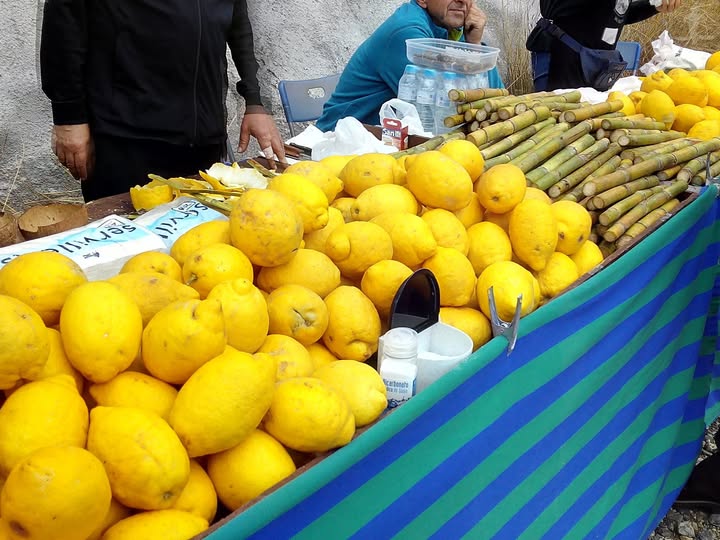
Cascaruo Lemon is something very unique to Malaga. As we mentioned before, during the colder months orchards are full of oranges and lemons. Among them is a variety with a very thick rind that is less acidic and sweeter than the common lemon.
People eat it traditionally in bites, slices and seasoned with salt or baking soda. When you stroll through the streets of Malaga city centre during Holy Week you can see small street stalls offering this popular little delicacy.
Ajobacalao Route in Vélez-Málaga
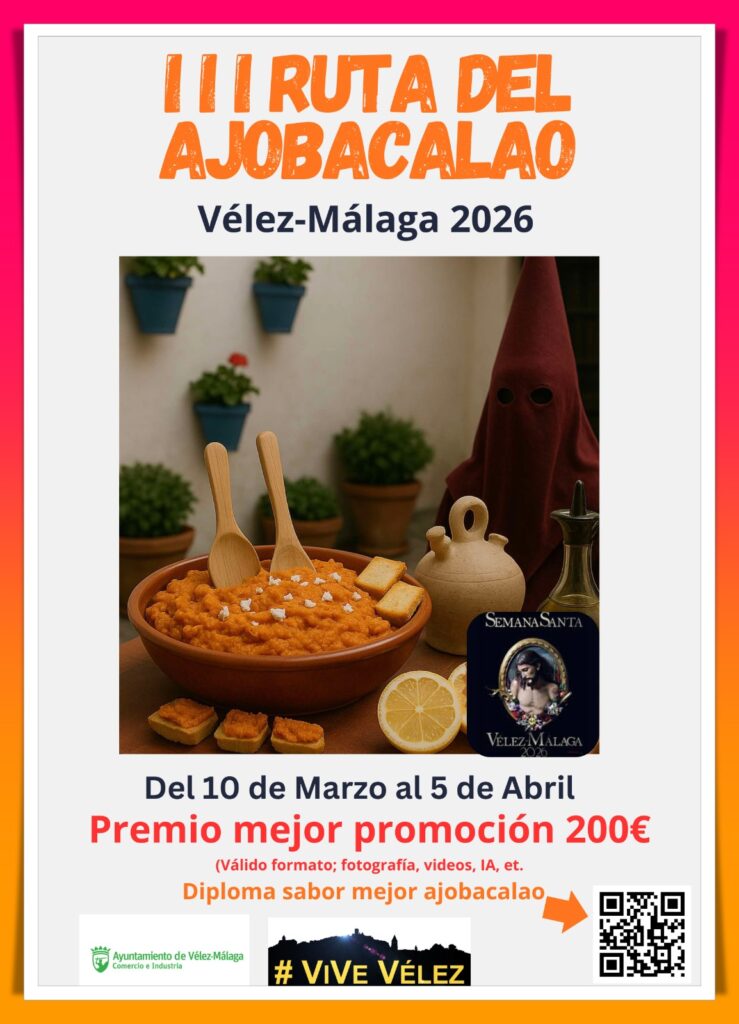
Vélez-Málaga is the main city the Axarquía region located about 40 km from Málaga. Typical of the city during Easter & Lenten is a tasty cod-based spread that’s served on bread.
Traditionally, it’s prepared for the bearers of the Holy Week thrones to help them regain their strength.
This “pâté” is called Ajobacalao (a combination of the words ajo and balacalo). It’s a mixture of breadcrumbs, extra virgin olive oil, salt cod, garlic, lemon, paprika, and chili pepper.
During Lent and Holy Week, you can enjoy this delicacy in many bars and restaurants in Vélez-Málaga in a special gastronomic route.
Between March 10 and April 5, local restaurants offer traditional recipes such as cod in pil-pil sauce, garlic cod croquettes and stews, to name just a few.
- When: March 10 to April 5
- Where: Bars and restaurants in Vélez-Málaga (see QR code on the poster)
- How to get there